
Strong Column, Weak Beam Criterion in VIS According to Eurocode 8
In the seismic design of reinforced concrete structures, the "strong column, weak beam" criterion defines where plasticization and energy dissipation occur within the structure. This principle requires that columns have greater strength than the beams framing into them, ensuring that plastic hinges form in the beams rather than in the columns. Eurocode 8 imposes this hierarchy of strengths through expression (4.29). This article places the criterion in context and demonstrates how to verify it at a beam-column joint using the workflow between SAP2000 and VIS.
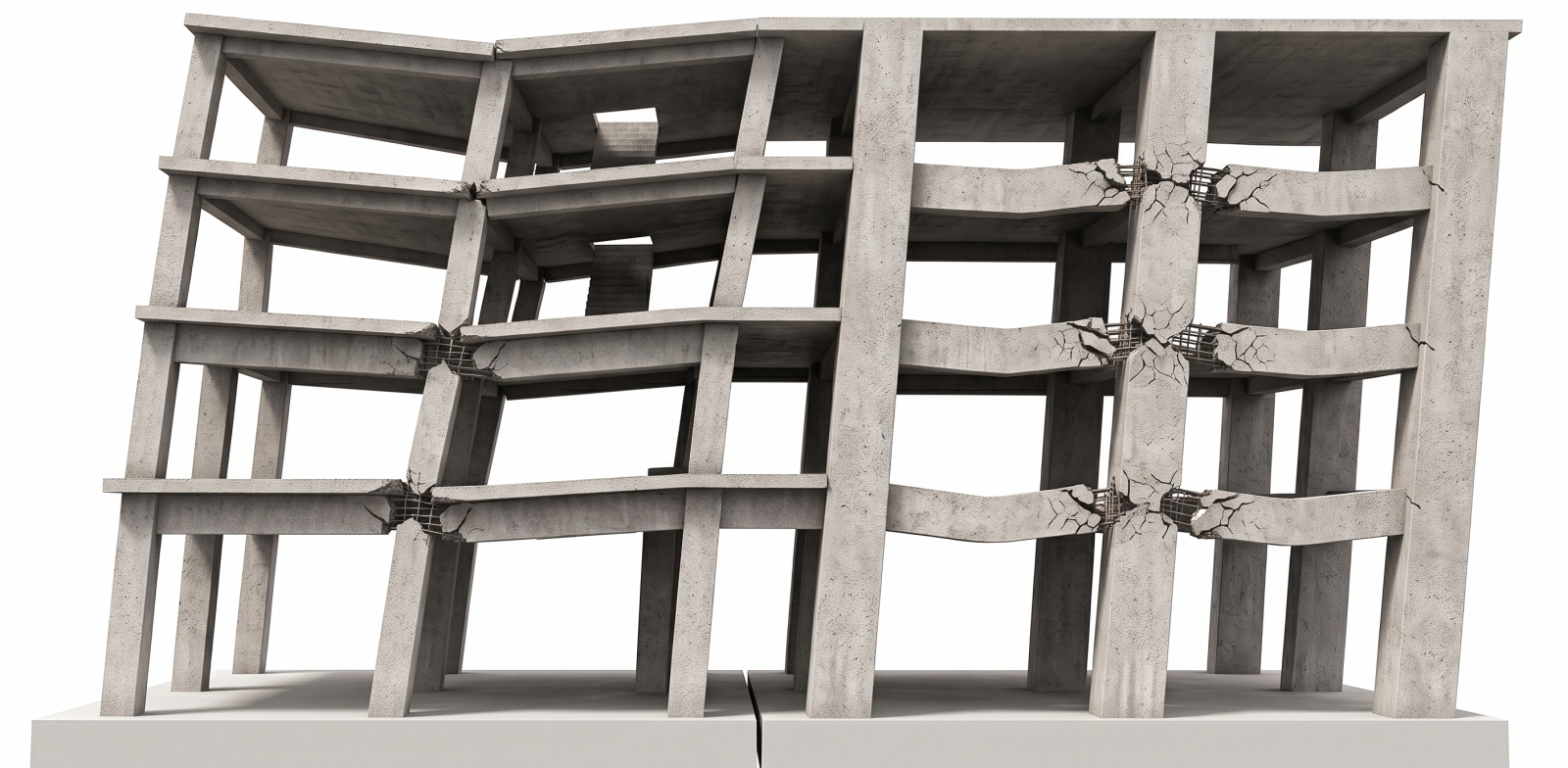
The starting point is capacity design. In a ductile structure, the plasticization mechanism is defined during the design stage. The objective is to promote a global energy dissipation mechanism, with the formation of plastic hinges in the beams on all floors, avoiding the storey mechanism (or soft-storey), characterized by the formation of hinges in the columns of a single floor, which leads to undesirable local or global collapse.
EN 1998-1, in Section 4.4.2.3, translates this requirement through expression (4.29). At each joint of a frame with two or more storeys, the sum of the resistant moments of the columns must exceed the sum of the resistant moments of the beams by at least 30 percent, resulting in the condition ∑ M₍Rc₎ ≥ 1.3 ∑ M₍Rb₎. The coefficient 1.3 represents the overstrength margin required to ensure that the column remains within the elastic range. The verification is performed in both orthogonal planes and in both directions of the seismic action, applying to medium ductility (DCM) and high ductility (DCH) classes.
Verification of the Beam-Column Joint in the Workflow Between SAP2000 and VIS
SAP2000 is a program fully capable of carrying out the entire seismic design and verification process according to Eurocode 8 independently. However, integration with VIS provides a complementary visual and interactive tool. In this example, SAP2000 is used for structural modelling, execution of the structural analysis, and calculation of internal forces. The model is then transferred to VIS, which performs the detailed verification of the joint, comparing the resistant capacity of the columns with the demands transmitted by the beams.
During joint verification, VIS evaluates the resistance of the columns under biaxial combined bending using the section PMM interaction surface (combining M2 and M3 moments simultaneously).
Video
Summary
The "strong column, weak beam" criterion is a hierarchy-of-strengths rule rather than a simple static equilibrium of loads. In the workflow presented, VIS performs the graphical verification of the joint under biaxial combined bending in accordance with Eurocode 8, taking advantage of the rigorous structural calculations provided by SAP2000. The practical conclusion is clear: the safety of the column is closely linked to the actual reinforcement provided in the beam. Therefore, detailing beam reinforcement as closely as possible to what is strictly required is the most coherent approach for ensuring the intended energy dissipation mechanism.